I have been wondering what to do with this blog. I started it just to get down some of the many things going on in my head related to my conversion. That lasted quite a while but tailed off after a few years. Later I started writing mostly arguments. I like arguing online. You can have much more intelligent arguments if you try. It is a medium that requires at least some reflection before responding and that helps a lot. The problem was that often nobody would come to argue with me. A few time it happened. Mostly atheists would come. Protestants are not typically looking to fight their corner against the best of Catholicism. Atheists are. Many atheists still believe they can defeat the arguments of the best Catholics. So you get them challenging Cardinals to debate. Some have come by here.
What ends up happening though is the debate moves to other blogs. That is fine. I am happy to find a debate that I can add to by presenting the Catholic arguments. There is a glut of ex-protestants, many of them ex-pastors, so those arguments are often already being handled very well. So I end up interacting with atheists and that is fine. I don't understand atheism as well as protestantism but it works good.
Still that leaves the question of what to do with this blog. I wonder about just stopping. I hate to do that. It has become a vehicle for self-expression that I don't really want to give up. I do want to get past arguments. They are a good way to clarify your thinking but they make it hard to be charitable. Catholicism is not defined against anything. It is simply being part of the family of God. When we try and live as a family we don't do it over against another family. We see other families and sometimes decide whether or not to use some of their ideas but we don't depend on anyone outside ourselves for our identity.
So I would like to try and blog in a way that does not have other groups in mind. They still might come up on occasion. I still want to speak the truth in love. But the center should just be the Catholic faith. My initial thought was to try and blog the Sunday gospel. This Sunday is the beginning of a new liturgical year. So it might be a good time to start something new. It can give me something to write about. See how long it lasts.
Only in truth does charity shine forth, only in truth can charity be authentically lived. Truth is the light that gives meaning and value to charity...Without truth, charity degenerates into sentimentality. Love becomes an empty shell, to be filled in an arbitrary way. Pope Benedict XVI
Tuesday, November 26, 2013
Monday, November 18, 2013
Where Atheism Is Going
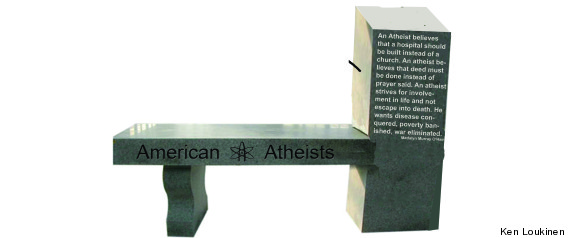
One of the questions Christians sometimes ask atheists is, "How can you believe that after you die you just cease to exist?" Atheists are ready for that one. It is a hard question especially for those who have had someone close to them die. Still atheists argue that it is better the face hard truth than to order your life around some future eternity that seems mostly based on wishful thinking. As atheism develops the question is changing. The question is no longer about whether we believe we will exist after we die. It is becoming a question of whether we believe we exist right now. That seems strange and most atheists have not arrived there yet but that is where the logic of atheism ends up.
What does it mean to be a person? Traditionally the answer has been that you have intellect, emotion, and will. A computer can do lots of things a person does but at its core it is just a machine following instructions. It cannot have an idea. It cannot feel love. It cannot decide to do this rather than that. It has to execute the instructions according to its program. That is all it can do. A computer can seem to have intellect, emotion and will but it is an illusion. The inputs completely determine the outputs. It does not add or subtract anything.
Scientific materialism is suggesting this is also true of human beings. That is we are nothing but complex machines. Everything we do and say and even think is completely determined by out inputs. Once we understand our genetics and our environment and how all those factors impact brain chemistry then we can completely determine all our thoughts, words and actions. So if you buy your wife some flowers it would not make any sense for her to thank you. You had to buy them given your physical makeup and the situation you are in. Your choice may have been based on something you call love but that is just a cute name for a set of chemical reactions that is not that different from any other set of chemicals. She might want to thank the cheeseburger you had for lunch. That could have impacted your brain and made a difference as to what choices you landed on. The cheeseburger can do that because it has a material impact. You can't do it because you don't actually exist. You never act. You only react. But you don't even control how you react. You are like driftwood and not like a fish.
There are two ways people can go with this. They can continue to assume atheism is true and they just have to accept the truth no matter how bad it is. It will get very bad indeed. There will be a lot of denial. Atheists will see no reason why all the good things like human rights and personal responsibility that flow from the Christian understanding of the human person won't just continue to be respected when that is replaced by a radically different understanding of what a human being is. It seems reasonable to them so why would it not seem reasonable to everyone forevermore? Because there is such a thing as evil.
The other way people can go is to question the plausibility of atheism based on this new information. That is hard to do. When people immerse themselves in a certain way of thinking they stop even realizing there are other ways to think. That is why it is important to continue to hold out Christianity as a light in an ever darkening secular reality.
Still are not the reasons for becoming atheist just as valid as before? Are we not just suggesting turning away from an unpleasant truth just because it is unpleasant? Don't we have to face reality as it is? Yes and no. There is something inherently implausible in the atheist account of things. Human beings just are a lot more interesting and beautiful then they should be if atheism was true. We have a sense of who we are. It is not irrational to trust that sense.
You already hear that in stories. Like Jen Fulwiler saying her love for her newborn baby must be more than just one bag of chemicals being influenced by another. Like Leah Libresco saying moral goodness can't be just a purely human phenomenon that can be changed arbitrarily by humans. Like Bryan Cross saying that his son's death must have meaning even though he can't see any. These are rational minds simply refusing to go where atheism is leading them. Not because they want to wish away the facts but because they just don't believe the truncated version of the human person that atheism entails is the truth.
What does it mean to be a person? Traditionally the answer has been that you have intellect, emotion, and will. A computer can do lots of things a person does but at its core it is just a machine following instructions. It cannot have an idea. It cannot feel love. It cannot decide to do this rather than that. It has to execute the instructions according to its program. That is all it can do. A computer can seem to have intellect, emotion and will but it is an illusion. The inputs completely determine the outputs. It does not add or subtract anything.
Scientific materialism is suggesting this is also true of human beings. That is we are nothing but complex machines. Everything we do and say and even think is completely determined by out inputs. Once we understand our genetics and our environment and how all those factors impact brain chemistry then we can completely determine all our thoughts, words and actions. So if you buy your wife some flowers it would not make any sense for her to thank you. You had to buy them given your physical makeup and the situation you are in. Your choice may have been based on something you call love but that is just a cute name for a set of chemical reactions that is not that different from any other set of chemicals. She might want to thank the cheeseburger you had for lunch. That could have impacted your brain and made a difference as to what choices you landed on. The cheeseburger can do that because it has a material impact. You can't do it because you don't actually exist. You never act. You only react. But you don't even control how you react. You are like driftwood and not like a fish.
There are two ways people can go with this. They can continue to assume atheism is true and they just have to accept the truth no matter how bad it is. It will get very bad indeed. There will be a lot of denial. Atheists will see no reason why all the good things like human rights and personal responsibility that flow from the Christian understanding of the human person won't just continue to be respected when that is replaced by a radically different understanding of what a human being is. It seems reasonable to them so why would it not seem reasonable to everyone forevermore? Because there is such a thing as evil.
The other way people can go is to question the plausibility of atheism based on this new information. That is hard to do. When people immerse themselves in a certain way of thinking they stop even realizing there are other ways to think. That is why it is important to continue to hold out Christianity as a light in an ever darkening secular reality.
Still are not the reasons for becoming atheist just as valid as before? Are we not just suggesting turning away from an unpleasant truth just because it is unpleasant? Don't we have to face reality as it is? Yes and no. There is something inherently implausible in the atheist account of things. Human beings just are a lot more interesting and beautiful then they should be if atheism was true. We have a sense of who we are. It is not irrational to trust that sense.
You already hear that in stories. Like Jen Fulwiler saying her love for her newborn baby must be more than just one bag of chemicals being influenced by another. Like Leah Libresco saying moral goodness can't be just a purely human phenomenon that can be changed arbitrarily by humans. Like Bryan Cross saying that his son's death must have meaning even though he can't see any. These are rational minds simply refusing to go where atheism is leading them. Not because they want to wish away the facts but because they just don't believe the truncated version of the human person that atheism entails is the truth.
Thursday, November 14, 2013
A Question About The Priesthood
Maybe it is just a fluke but lately whenever the subject of the priesthood comes up the same question is raised. Why does a person have to have a penis to be a priest? It is always phrased in that way. That strikes me as odd because it is a pretty crude way to say it and often the people involved don't typically use crude language. It is like there is someone publishing feminist talking points somewhere and everyone is just asking the same question in the same way.
The phrasing does point to an assumption. There is a focus on the physical difference between men and women. Like that is all there is. If you want to understand what it means to be a man or what it means to be a woman all you have to do is study male and female genitals. What more could there be?
On the other hand the formation of the question is valid. A man that has been castrated can't be ordained a priest. So in some sense a penis is required. That rule goes all the way back to the levitical priesthood established by Moses.
To answer the question you need to understand that priests need to impregnate us. That God 's presence in the Eucharist and God's presence in His word is supposed to do to us what a man's seed does to a fertile woman. That is that God's gift of Himself combines with her gift of herself and becomes a new creation. That is what we do. We don't just let God do His thing with us. We give ourselves so God's thing is also our thing. Yet it is not completely ours. It has a life of its own.
Then we take that gift into out most intimate space and nurture it without anybody noticing. We allow it to grow deep in our hearts through prayer and contemplation. Eventually it grows. We start to recognize it. It is a piece or art. It is a book. It is a ministry you want to get involved in. It is a relationship you need to take in a new direction. It is whatever God intends to give birth to through you.
If you understand this idea that we are to be sacramentally impregnated by our priests then it makes more sense why a priest needs a penis. Yes, God could set things up so that a female could become a priest and spiritually impregnate us. There would not be any physical problem with that. Yet God chooses to line up the physical world with the spiritual world. It gives us a better chance of getting the spiritual stuff right.
Does this imply that women are somehow less than men? Not at all. Thinks about what this means. Most of us celebrate the Eucharist not as the priest but as the communicant. That means we take the female role in this impregnating spiritual dynamic. So it seems women have an advantage here. They can embrace this more naturally because it follows the female side of sex, pregnancy, and mother hood. It is the men that are going to have to make an adjustment.
Peter Kreeft puts it this was:
The phrasing does point to an assumption. There is a focus on the physical difference between men and women. Like that is all there is. If you want to understand what it means to be a man or what it means to be a woman all you have to do is study male and female genitals. What more could there be?
On the other hand the formation of the question is valid. A man that has been castrated can't be ordained a priest. So in some sense a penis is required. That rule goes all the way back to the levitical priesthood established by Moses.
To answer the question you need to understand that priests need to impregnate us. That God 's presence in the Eucharist and God's presence in His word is supposed to do to us what a man's seed does to a fertile woman. That is that God's gift of Himself combines with her gift of herself and becomes a new creation. That is what we do. We don't just let God do His thing with us. We give ourselves so God's thing is also our thing. Yet it is not completely ours. It has a life of its own.
Then we take that gift into out most intimate space and nurture it without anybody noticing. We allow it to grow deep in our hearts through prayer and contemplation. Eventually it grows. We start to recognize it. It is a piece or art. It is a book. It is a ministry you want to get involved in. It is a relationship you need to take in a new direction. It is whatever God intends to give birth to through you.
If you understand this idea that we are to be sacramentally impregnated by our priests then it makes more sense why a priest needs a penis. Yes, God could set things up so that a female could become a priest and spiritually impregnate us. There would not be any physical problem with that. Yet God chooses to line up the physical world with the spiritual world. It gives us a better chance of getting the spiritual stuff right.
Does this imply that women are somehow less than men? Not at all. Thinks about what this means. Most of us celebrate the Eucharist not as the priest but as the communicant. That means we take the female role in this impregnating spiritual dynamic. So it seems women have an advantage here. They can embrace this more naturally because it follows the female side of sex, pregnancy, and mother hood. It is the men that are going to have to make an adjustment.
Peter Kreeft puts it this was:
In the very act of self-surrender to God there is joy. Not just later, as a consequence, but right then. It is exactly like a woman's voluntary sexual surrender to a man. The mystics often say all souls are female to God; that's one reason why God is always symbolized as male. Of course it's only a symbol, but it's a true symbol, a symbol of something true.
Friday, November 8, 2013
Evangelism
When we talk about the New Evangelization one problem we have is confusion about what the word evangelism means. We have an idea that comes from interacting with protestants. That is the notion that evangelism means pushing people to accept you faith. Many protestants think of it as getting people saved. They believe that Christianity revolves around a single moment of conversion when you saw the light and accepted Jesus into your heart and were saved. So evangelism to them is the act of getting people to that moment. Use whatever tricks you can to make them walk the aisle and say the prayer.
Catholicism has a very different idea of salvation. People can be moved closer to God no matter where they are. You never really know where people are. You can evangelize a priest by telling him a story of God's grace in your life. You might have just prevented that priest from falling into mortal sin. You don't know. That is why the parable of the sower in Mat 13 is so good. Just sow seed. Drop little bundles of grace on anyone and everyone you meet. You need to become unafraid of connecting things with your faith. Find a way of giving God credit for the good things you do. Find a language that works. It has to fit who you are and it has to fit what we believe as Catholics as well.
Spreading seed is one model for evangelism. Another model for evangelism is in the story of Zacchaeus in this weeks gospel from Luke 19. Jesus sees Zacchaeus and invites Himself to his house. That is quite a bold move to make with a total stranger. Can we get that bold? We should not do that with everyone. That would be strange. Yet are we open to God calling us to make a bold evangelical move? Catholic spirituality does not all revolve around one moment of conversion but conversions still matter. We can actually have many in our journey with God. Often God uses someone to make it happen just like Jesus made Zacchaeus' conversion happen. Can He use us? Is there any situation where you would actually challenge someone to make a life changing decision for Christ?
The big thing is honesty. Sharing faith is just part of love. Love involves revealing yourself. Your faith is part of yourself. Faith should be totally integrated into all areas of your life. If faith is just one thing I do unrelated to the rest of my life then the occasion of faith sharing is never going to come up naturally. If everything I do is informed by faith then sharing that is just giving God credit where he deserves it. It is not injecting religion artificially into something because I have a duty to evangelize.
Really honesty is the key. We tend to want to fix our faith life before we share it. Don't do that. Life is messy. Share all the doubts, all the confusion, all the pain, etc. Don't make it seem like happy, happy, joy, joy. It is OK to struggle and it is OK to talk about your struggles.
Often you end up sharing some of the most embarrassing incidents in your life. Those tend to be the times when you experience God's presence most clearly. Learning to tell those stories can be quite powerful. It does not have to be something to rival St Paul's encounter with Jesus on the road to Damascus. It just has to be something that built your faith. People who care about you will care about your story if you tell it honestly.
The other thing that helps is learning to answer some very basic questions. You don't need to be an expert in theology but you do need to not get completely flustered when common questions are asked. Learn a little and it seem to many like you know a lot. Unfortunately there is a lot of truth to the Catholic stereotype that when you bring up religion they panic and change the subject. If you just stop doing that it will be a big step forward.
Catholicism has a very different idea of salvation. People can be moved closer to God no matter where they are. You never really know where people are. You can evangelize a priest by telling him a story of God's grace in your life. You might have just prevented that priest from falling into mortal sin. You don't know. That is why the parable of the sower in Mat 13 is so good. Just sow seed. Drop little bundles of grace on anyone and everyone you meet. You need to become unafraid of connecting things with your faith. Find a way of giving God credit for the good things you do. Find a language that works. It has to fit who you are and it has to fit what we believe as Catholics as well.
Spreading seed is one model for evangelism. Another model for evangelism is in the story of Zacchaeus in this weeks gospel from Luke 19. Jesus sees Zacchaeus and invites Himself to his house. That is quite a bold move to make with a total stranger. Can we get that bold? We should not do that with everyone. That would be strange. Yet are we open to God calling us to make a bold evangelical move? Catholic spirituality does not all revolve around one moment of conversion but conversions still matter. We can actually have many in our journey with God. Often God uses someone to make it happen just like Jesus made Zacchaeus' conversion happen. Can He use us? Is there any situation where you would actually challenge someone to make a life changing decision for Christ?
The big thing is honesty. Sharing faith is just part of love. Love involves revealing yourself. Your faith is part of yourself. Faith should be totally integrated into all areas of your life. If faith is just one thing I do unrelated to the rest of my life then the occasion of faith sharing is never going to come up naturally. If everything I do is informed by faith then sharing that is just giving God credit where he deserves it. It is not injecting religion artificially into something because I have a duty to evangelize.
Really honesty is the key. We tend to want to fix our faith life before we share it. Don't do that. Life is messy. Share all the doubts, all the confusion, all the pain, etc. Don't make it seem like happy, happy, joy, joy. It is OK to struggle and it is OK to talk about your struggles.
Often you end up sharing some of the most embarrassing incidents in your life. Those tend to be the times when you experience God's presence most clearly. Learning to tell those stories can be quite powerful. It does not have to be something to rival St Paul's encounter with Jesus on the road to Damascus. It just has to be something that built your faith. People who care about you will care about your story if you tell it honestly.
The other thing that helps is learning to answer some very basic questions. You don't need to be an expert in theology but you do need to not get completely flustered when common questions are asked. Learn a little and it seem to many like you know a lot. Unfortunately there is a lot of truth to the Catholic stereotype that when you bring up religion they panic and change the subject. If you just stop doing that it will be a big step forward.
Friday, November 1, 2013
All Saints Day
One thing we hear a lot these days is we are all called to be saints. Pope Francis said it again today. I heard it at mass today. But we still don't seem to get it. People go through life with a sense that there are really holy people, really bad people, and then there is the majority of us in the middle. Yet that is precisely the view of the world being rejected. There are not three groups of people There are two. There are two destinations, heaven and hell. Purgatory exists but it is not a destination. Nobody spends eternity there. So the news of All Saints Day should rock your world. There is not majority in the mushy middle. There are just saints, who enter heaven, and the rest, who can never enter heaven.
This is good news and it is bad news. The good news is we can be holy. We don't have to look at the great saints of the church and tell ourselves I will never be like that. You can be. That is precisely what being Catholic is all about. It is not about punching a ticket and hopefully you get in. It is about being changed in the most amazing and profound way. That means you get to have a heart filled with love for everyone. It means you get to connect with God in a way that gives you profound peace. It means joy that goes deeper than any sorrow. It means you can be righteous, not a pious facade but authentic righteousness.
The bad news is not everyone is taking this trip. Why not? Partly because we have not told them how important it is and how awesome it is. So we need to do that. Not by being preachy but by being real. Still we need to be clear. The mushy middle is an illusion. It does not exist. You are either a saint or you are not.
The thing is God can't stop loving you. No matter how indifferent or even rebellious you are He keeps on loving you the way only God can. The love He showed on the cross is always there. Now if you refuse to cooperate. If you want to do your own thing. If you just have no interest in being in a love relationship with God. That will keep you out of heaven because heaven is a place where nothing impure can enter and you will not be pure. But it is worse than that. You see, God keeps loving you. Yet He stops bugging you. He stops constantly calling you to a love relationship. He stops pouring grace into you life in hopes that you will turn around and embrace Him. But He oes not stop loving you. He can't. God is love.
What is more is you continue to be made for love. So you have this love that is there and this sense deep down inside that you were made for that love. Yet you can't get there. You can't get over yourself and embrace God. You are too wrapped up in your own little addictions and ideologies and whatever else. It can't happen.
That is why the same love that bring joy to the saint and salvation to the sinner brings torment to those in hell. God does not go out of His way to punish those in hell. He just continues to be what He is. He continues to love.
So embrace that love while you can. It is offered for a finite time. We choose what we choose. We can impact the choice other make as well. It is ultimately the only thing that matters in life. We can play a part in the salvation of souls, including our own. The flip side is if we fail to play that part that can have eternal consequences as well.
This is good news and it is bad news. The good news is we can be holy. We don't have to look at the great saints of the church and tell ourselves I will never be like that. You can be. That is precisely what being Catholic is all about. It is not about punching a ticket and hopefully you get in. It is about being changed in the most amazing and profound way. That means you get to have a heart filled with love for everyone. It means you get to connect with God in a way that gives you profound peace. It means joy that goes deeper than any sorrow. It means you can be righteous, not a pious facade but authentic righteousness.
The bad news is not everyone is taking this trip. Why not? Partly because we have not told them how important it is and how awesome it is. So we need to do that. Not by being preachy but by being real. Still we need to be clear. The mushy middle is an illusion. It does not exist. You are either a saint or you are not.
The thing is God can't stop loving you. No matter how indifferent or even rebellious you are He keeps on loving you the way only God can. The love He showed on the cross is always there. Now if you refuse to cooperate. If you want to do your own thing. If you just have no interest in being in a love relationship with God. That will keep you out of heaven because heaven is a place where nothing impure can enter and you will not be pure. But it is worse than that. You see, God keeps loving you. Yet He stops bugging you. He stops constantly calling you to a love relationship. He stops pouring grace into you life in hopes that you will turn around and embrace Him. But He oes not stop loving you. He can't. God is love.
What is more is you continue to be made for love. So you have this love that is there and this sense deep down inside that you were made for that love. Yet you can't get there. You can't get over yourself and embrace God. You are too wrapped up in your own little addictions and ideologies and whatever else. It can't happen.
That is why the same love that bring joy to the saint and salvation to the sinner brings torment to those in hell. God does not go out of His way to punish those in hell. He just continues to be what He is. He continues to love.
So embrace that love while you can. It is offered for a finite time. We choose what we choose. We can impact the choice other make as well. It is ultimately the only thing that matters in life. We can play a part in the salvation of souls, including our own. The flip side is if we fail to play that part that can have eternal consequences as well.
Friday, October 25, 2013
Communicating Sin
One of the hardest parts of Christianity for modern people to grasp is the notion of sin. We think we are pretty good. We have been trained not to feel guilty for anything. Self esteem is important and if you just believe in yourself you can accomplish a lot. It is true to a point. The trouble is that then people just don't understand why we need a savior. Why Jesus would die on the cross. Why God would have the concept of hell. Why grace is really amazing.
I wonder if the parable of the prodigal son from Luke 15 makes sense here. It is often seen as the picture of grace but it gives us a picture of sin as well. I am thinking of the two kinds of sin exhibited by the two sons. The sin of rebellion which we can see plainly. Of course, the rebellious son could not see it until he came to his senses but it is kind of obvious.
Then there is the other son. He is the good kid. Yet he says he served his father like a slave. He resents his father for not rewarding his good behavior and being too forgiving to his brother. He is the one who does not see himself as a sinner. He has done good but not on the same level as the father.
It is that kind of guy that can have a problem grasping sin. He has never been bad enough to feel that sin is a big problem. So accepting that radical solution that Christianity offers to sin seems a little much. The smallness of the problem is part of the problem. That is a small vision of life. Play by the rules. Don't question the rules but don't really embrace the rule-maker either. You make peace with God but you don't love God with everything you have.
That peace is based on some sort of micro-rebellion. God keeps drawing us closer and closer. The only way to not end up deeply in love with Him is to push Him away at some point. For the older son that point was being asked to forgive his brother. That was too much. But pushing God away at any point is a problem. In fact, it is the only real problem we have. If we stay with God what seems like a problem ends up being an adventure. We get hurt. We look stupid. No problem. We learn. We heal. We fall deeper in love with God. But if we push God away. If we say this is too much. If we would rather lose God than follow Him down this path. Then we have a problem.
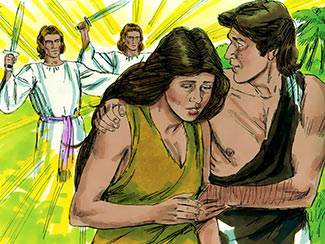
That is the essence of sin. It is not so much the size of the rebellion. Adam and Eve rebelled over a piece of fruit. It is the lack of trust. Saying to God, "My life would be better if I did something other than Your will."
So we can see how every sin will separate us from God. A lack of trust can never really be a small matter. It will make the kind of love relationship God wants to have with us impossible.
I wonder if the parable of the prodigal son from Luke 15 makes sense here. It is often seen as the picture of grace but it gives us a picture of sin as well. I am thinking of the two kinds of sin exhibited by the two sons. The sin of rebellion which we can see plainly. Of course, the rebellious son could not see it until he came to his senses but it is kind of obvious.
Then there is the other son. He is the good kid. Yet he says he served his father like a slave. He resents his father for not rewarding his good behavior and being too forgiving to his brother. He is the one who does not see himself as a sinner. He has done good but not on the same level as the father.
It is that kind of guy that can have a problem grasping sin. He has never been bad enough to feel that sin is a big problem. So accepting that radical solution that Christianity offers to sin seems a little much. The smallness of the problem is part of the problem. That is a small vision of life. Play by the rules. Don't question the rules but don't really embrace the rule-maker either. You make peace with God but you don't love God with everything you have.
That peace is based on some sort of micro-rebellion. God keeps drawing us closer and closer. The only way to not end up deeply in love with Him is to push Him away at some point. For the older son that point was being asked to forgive his brother. That was too much. But pushing God away at any point is a problem. In fact, it is the only real problem we have. If we stay with God what seems like a problem ends up being an adventure. We get hurt. We look stupid. No problem. We learn. We heal. We fall deeper in love with God. But if we push God away. If we say this is too much. If we would rather lose God than follow Him down this path. Then we have a problem.
That is the essence of sin. It is not so much the size of the rebellion. Adam and Eve rebelled over a piece of fruit. It is the lack of trust. Saying to God, "My life would be better if I did something other than Your will."
So we can see how every sin will separate us from God. A lack of trust can never really be a small matter. It will make the kind of love relationship God wants to have with us impossible.
Tuesday, October 22, 2013
Less Sex And Worse Sex
Greg Popcak did a post a while ago now analyzing a study of the hookup culture. His point was that the media missed the point. They summarized the study as finding that hookups are all hype and nothing has changed. That is because they focused on how often college kids were having sex and with how many partners. It turns out that has actually gone down a bit. But Popcak is still concerned:
What Japan tells us is that Dr Popcak's concern is well founded. When marriage is removed as the goal of sexual relationships then they ultimately become boring and people lose interest. People eventually see the emptiness. They learn what Catholicism says is actually true. There are two vocations, marriage and celibacy. There is no other kind of sex life humans can find peace in. If you throw away all the rules that help young people find marriage that won't lead them to happiness. It will simply mean a longer, more painful road to marriage or celibacy.
It is something that is hard to fix once it has broken down. In Japan they are very concerned that adult diapers are out-selling baby diapers. Yet the number of children born in 2012 was the lowest ever. So government wants to fix it but it just keeps getting worse. Decisions about marriage and children are made at a deep level and governments just don't impact people at that level very often. They need hope. Not sure where you get that other than religion.
So, as I said, young people are having, more or less, about as much premarital sex as ever. But that’s not really what the hookup culture is about. The hookup culture isn’t just about the amount of sex people have and the number of people having it. It is about the kind of sex people have and the attitudes toward sex people hold. And this where I think the Univ. of Portland study really does support concerns about the hook-up culture. The second part of the study shows that young adults are more likely than their older counterparts to have casual sex with strangers or friends and see casual hookups or “friends with benefits” as a substitute for marriage instead of a potential path to marriage as previous generations at least tacitly did.Then I saw something else on sex in Japan. That is another sexually permissive culture. What has happened there? Sexual activity has gone way down. Why? There are a bunch of theories. The bottom line is marriage and children have become unattractive options, especially for women. It takes time for that to sink in but once it does then a lot of young people just stop dating.
I meet Eri Tomita, 32, over Saturday morning coffee in the smart Tokyo district of Ebisu. Tomita has a job she loves in the human resources department of a French-owned bank. A fluent French speaker with two university degrees, she avoids romantic attachments so she can focus on work. "A boyfriend proposed to me three years ago. I turned him down when I realised I cared more about my job. After that, I lost interest in dating. It became awkward when the question of the future came up."There is this notion that if religion would just get out of the way then everyone would have tons of sex and life would be great. Yet we see two counterexamples here. Permissiveness leads not to more sex but rather to worse sex in one case and to what is called the "celibacy syndrome" in the other case.
What Japan tells us is that Dr Popcak's concern is well founded. When marriage is removed as the goal of sexual relationships then they ultimately become boring and people lose interest. People eventually see the emptiness. They learn what Catholicism says is actually true. There are two vocations, marriage and celibacy. There is no other kind of sex life humans can find peace in. If you throw away all the rules that help young people find marriage that won't lead them to happiness. It will simply mean a longer, more painful road to marriage or celibacy.
It is something that is hard to fix once it has broken down. In Japan they are very concerned that adult diapers are out-selling baby diapers. Yet the number of children born in 2012 was the lowest ever. So government wants to fix it but it just keeps getting worse. Decisions about marriage and children are made at a deep level and governments just don't impact people at that level very often. They need hope. Not sure where you get that other than religion.
Subscribe to:
Posts (Atom)