Sam Harris has made a challenge around his book The Moral Landscape. Lots of internet talk about it. Leah Libresco. Ross Douthat. The challenge is to write an essay that convinces Harris he is wrong. Good luck with that. He is wrong of course. The trouble is he can't see it. The problem is not that he is not smart enough or that he is dishonest. The problem is assumptions he has made and cannot question because he does not know they exist.
What he starts with is the idea that humans seem to have some moral impulses embedded in them. He has noticed that moral thinking has not really focused on those impulses over the centuries. It has not ignored them but the focus of moral reasoning has been around other moral inputs. Around revelations from God, around attempts to construct a rational model for morality, around duties and virtues and utility and on and on. There has been very little study around our moral selves.
Harris thinks that if we really understood our moral impulses and where they come from then what is moral or immoral would become obvious. This gives another reason why it is hard to prove him wrong. How can you know something won't become obvious after much study? I think we can know that but only because I accept some things about morality that Sam Harris does not. So I can prove it if he gives me a premise or two but my expectation is he won't do that. In fact, he has explicitly denied some of the premises I would assert.
First of all, morality has to have some foundation that points to goodness. He wants to use the human person as a foundation. That is not always bad. The trouble comes when you couple that with evolution. Actually even evolution is not a problem. It is evolution that lacks teleology. That is evolution that is not ordered towards something good but just happens to go where it goes.
If you find something in the human person. Say they love life and hate death. How did that thing get there? Now if you say man was created in God's image then you know that got there because God loves life and hates death. That makes it a moral principle. If you believe in an evolution without a goal then that means a lot less. It means sometime in the history of our species there was a survival advantage to loving life and hating death. It does not mean it is good for us now. It just means it is easy for us. We are equipped to do it. It does not even mean it was ever good for us in an absolute sense. It just means it helped in survival in some situations. Not that it was the best thing or even a noble thing. Just that it was a useful thing at some point in time.
But what happens when somebody says he has discerned some higher good and we need to kill people in the service of that higher good? We know we have an impulse not to kill. So what? People have always had that impulse and still many killings happen. We know where our impulse comes from? We are assuming greater scientific knowledge so say we know what gene it is associated with and what brain dynamics are going on when we feel this impulse. Does that help? Maybe a little. We might be able to see that killing permanently damages the brain. That we can't just put the soldier or the torturer back into society and expect all to go well. So that science might give us something to think about.
What science will not be able to construct is a firm moral principle. A simple principle like, "Thou shalt not kill" can't be the result. Science can only describe cause and effect. It cannot say the effect is wrong. Something else needs to tell us that. It can make us understand the consequences of killing better and that is a good thing. Still it can never tell us the impulse not to kill is right and we should trust it more than we should trust these guys who promise us a better society if we just kill a few people.
So what Sam Harris calls the science of morality isn't really morality at all. It is simply saying that moral issues will go away if we understand the brain a little better and understand other cause and effects a little better. Salvation through science.
Behind that we have an assumption that moral feelings don't point to some bigger reality of moral goodness. That moral feelings point to nothing at all. They just are. If we manipulate them we don't have to worry about making sure they lead you into what is right. We just have to worry about the feelings themselves bothering you.
So if you feel bad because you lied the problem is not that lying is inherently bad. The problem is the feeling itself. Telling the truth is one way to feel better. What if science could give you a pill that made you stop feeling guilty after lying? Would that make lying OK? I don't know if Harris would say Yes but under his understanding of he should say Yes. The human moral impulse is gone so the moral issue is gone.
It is a bit like people have tried to do with sexual morality. If you can deaden you conscience on sexual matters then the moral issue is just gone. They call it getting over your hangups or just growing up. But what you have done is the same thing as taking a pill to make you stop feeling guilty about lying. You have not changed the moral nature of the act. You have just changed your feelings.
Only in truth does charity shine forth, only in truth can charity be authentically lived. Truth is the light that gives meaning and value to charity...Without truth, charity degenerates into sentimentality. Love becomes an empty shell, to be filled in an arbitrary way. Pope Benedict XVI
Friday, September 20, 2013
Friday, September 13, 2013
Jesus And History
Just reflecting on how remarkable it is that Christianity didn't begin its rapid growth until after Jesus had died. It is remarkable even if you believe in the resurrection and the apostles as eye witnesses of the resurrection. But what if you don't? What if you believe Christianity is false and started from completely natural phenomenon? How does Jesus end up in the center of it? When He dies the movement is small and localized in Galilee. Some would even suggest He never lived. This is hugely different from founders of other movements. Islam was a major force before Mohammad died. Joseph Smith led a community of Mormons for a long time. Jesus is alone among religious leaders in many ways but this is a big one. He never established a strong following during His life. The book of Acts suggests even after the resurrection all His followers could fit in one room. They had almost no political power or organization.
The other thing that Jesus did not do was write. Again, the classic parallels with Mohammad and Joseph Smith break down. They wrote a lot. Their writings still take a central place in the religions they started. As far as we know Jesus wrote nothing. There is one reference to him writing on the ground in John 8. That is the only evidence we have that He knew how to write. St Paul was the first Christian to really write anything serious and that was not until maybe two decades after Jesus' death.
So how does Jesus end up as the center of this religion? Why are they not called Paulians rather than Christians? Paul was doing the most serious work. He was writing. He was evangelizing. Planting churches all over the Roman empire. In fact, it is not clear why he needed Peter and John and the rest of the apostles. If you believe his story of his road to Damascus experience then it is clear. But what if you don't? What if you think that story was made up too?
If you believe in a Jesus who made a few nice sermons and died then you have to believe in an early church that really played fast and loose with history and theology. The idea that Jesus did miracles, Jesus claimed to be God, and rose from the dead, those became standard talking points pretty quickly. But changes didn't continue to happen. In fact, Christianity resisted changes proposed by gnosticism. It was criticized and persecuted by Rome for some other things yet they didn't just change. This is the same religious community that accepted these massive changes to their belief system about the resurrection of Jesus, the divinity of Jesus, the virgin birth, the feeding of the 5000, etc. Really not one community because the many churches across the empire were basically independent because of the state of transportation and communication. So we have many churches independently exhibiting this schizophrenic phenomenon of being totally open to some ideas and totally closed to others.
Yet somehow when we get to the 4th century we get a fairly unified church. When they hold a council at Nicea they know who to invite. Those who are legitimate successors of the apostles. They know who they are. How does that happen? We know about schisms in the church. We know how easily they happen and how hard they are to fix. Once you have schism one thing you cannot agree on is who are the legitimate leaders of the church for the purposes of resolving doctrinal disputes. So the church's ability to convene the council of Nicea shows there is no significant schism. Why not? They all share the same faith that came down from Jesus and taught by the apostles and their successors. That makes perfect sense if you believe that story is true. But what if you don't? How does that kind of thing get started? We know it can start with a charismatic man who truly believes it. But if Jesus was not that then how does it start?
You don't see these questions addressed in modern historical scholarship. Whether from a liberal Christian perspective or a secular perspective historians just duck these questions. They look at the source documents and argue that they are not reliable. Then they go into a big hand waving exercise to say the Christian story just grew up over time. When were the 4 gospels written? You get different answers. But the question of how someone writes such a thing and it is just accepted by the church as authentic while other gospels are rejected as forgeries. The church does not divide over which ones to believe. They know. Again, makes sense if it is based on fact. It is hard to envision if it is not.
The other thing that Jesus did not do was write. Again, the classic parallels with Mohammad and Joseph Smith break down. They wrote a lot. Their writings still take a central place in the religions they started. As far as we know Jesus wrote nothing. There is one reference to him writing on the ground in John 8. That is the only evidence we have that He knew how to write. St Paul was the first Christian to really write anything serious and that was not until maybe two decades after Jesus' death.
So how does Jesus end up as the center of this religion? Why are they not called Paulians rather than Christians? Paul was doing the most serious work. He was writing. He was evangelizing. Planting churches all over the Roman empire. In fact, it is not clear why he needed Peter and John and the rest of the apostles. If you believe his story of his road to Damascus experience then it is clear. But what if you don't? What if you think that story was made up too?
If you believe in a Jesus who made a few nice sermons and died then you have to believe in an early church that really played fast and loose with history and theology. The idea that Jesus did miracles, Jesus claimed to be God, and rose from the dead, those became standard talking points pretty quickly. But changes didn't continue to happen. In fact, Christianity resisted changes proposed by gnosticism. It was criticized and persecuted by Rome for some other things yet they didn't just change. This is the same religious community that accepted these massive changes to their belief system about the resurrection of Jesus, the divinity of Jesus, the virgin birth, the feeding of the 5000, etc. Really not one community because the many churches across the empire were basically independent because of the state of transportation and communication. So we have many churches independently exhibiting this schizophrenic phenomenon of being totally open to some ideas and totally closed to others.
Yet somehow when we get to the 4th century we get a fairly unified church. When they hold a council at Nicea they know who to invite. Those who are legitimate successors of the apostles. They know who they are. How does that happen? We know about schisms in the church. We know how easily they happen and how hard they are to fix. Once you have schism one thing you cannot agree on is who are the legitimate leaders of the church for the purposes of resolving doctrinal disputes. So the church's ability to convene the council of Nicea shows there is no significant schism. Why not? They all share the same faith that came down from Jesus and taught by the apostles and their successors. That makes perfect sense if you believe that story is true. But what if you don't? How does that kind of thing get started? We know it can start with a charismatic man who truly believes it. But if Jesus was not that then how does it start?
You don't see these questions addressed in modern historical scholarship. Whether from a liberal Christian perspective or a secular perspective historians just duck these questions. They look at the source documents and argue that they are not reliable. Then they go into a big hand waving exercise to say the Christian story just grew up over time. When were the 4 gospels written? You get different answers. But the question of how someone writes such a thing and it is just accepted by the church as authentic while other gospels are rejected as forgeries. The church does not divide over which ones to believe. They know. Again, makes sense if it is based on fact. It is hard to envision if it is not.
Monday, September 9, 2013
Is Catholicism Like Science?
What happens when you accept science as a source of truth in your life? First of all, you accept what previous scientists have settled on. Sure those findings are not really considered infallible but you can't credibly call yourself a science person if you think NASA faked to moon landing or dinosaurs walked the earth 6000 years ago. So practically speaking you have to accept a lot. What you are really accepting is not a bunch of random facts but you are accepting the validity of the scientific method. That truth arrived at in the past through this method is going to be trustworthy. You also are accepting that truth arrived at in the future through this method will be trustworthy. So there is any number of facts science will discover and you don't know what but you plan to ascent to these as well because you think the method is sound.
Now nobody says that if you do so then you have made a choice to stop thinking. That you are just being told what to think and you no longer use reason or intelligence. We know that scientists use their intellect a lot. While there is a ton of accepted scientific knowledge there are many more questions that are not settled. We are not even close to having settled everything. Even if we did there would still be the matter of applying it to your life. We would still have to think a lot.
So what about Catholicism? When you become Catholic you accept the church as a source of truth in your life. First of all, you accept what Catholics have settled on. Sure those findings are not often considered infallible but you can't credibly call yourself a Catholic if you don't believe abortion is wrong or Jesus rose from the dead. So practically speaking you have to accept a lot. What you are really accepting is not a bunch of random facts but you are accepting the validity of God revealing Himself through the church and specifically through the popes. That truth arrived at in the past through this method is going to be trustworthy. You also as accepting that truth arrived at in the future through this method will be trustworthy. So there is any number of doctrines future popes will teach and you don't know what but you plan to ascent to these as well because you think the method is sound.
Now you will get many people saying you have stopped thinking. That you are just being told what to think and you no longer use reason or intelligence. Do those people think theologians don't use their intellect? You wonder. If you are Catholic you know while there are many theological questions settled there is much more that is still being discovered. Even if we settled everything there would still be the matter of each person applying it to their own lives. We would still have to think a lot.
I think the parallels are huge. You just have to get your mind around the idea that false thinking needs to be corrected. In one environment it is corrected by experimentation. In the other environment it is corrected by the church condemning false teaching. The rest works basically the same. Yet somehow people get this idea that one involves reason and the other does not. It is laughable to anyone who actually does theology. But it is not funny because such a lie blocks people from the great joys of Catholicism. Literally the greatest joy in this life and the next.
Now nobody says that if you do so then you have made a choice to stop thinking. That you are just being told what to think and you no longer use reason or intelligence. We know that scientists use their intellect a lot. While there is a ton of accepted scientific knowledge there are many more questions that are not settled. We are not even close to having settled everything. Even if we did there would still be the matter of applying it to your life. We would still have to think a lot.
So what about Catholicism? When you become Catholic you accept the church as a source of truth in your life. First of all, you accept what Catholics have settled on. Sure those findings are not often considered infallible but you can't credibly call yourself a Catholic if you don't believe abortion is wrong or Jesus rose from the dead. So practically speaking you have to accept a lot. What you are really accepting is not a bunch of random facts but you are accepting the validity of God revealing Himself through the church and specifically through the popes. That truth arrived at in the past through this method is going to be trustworthy. You also as accepting that truth arrived at in the future through this method will be trustworthy. So there is any number of doctrines future popes will teach and you don't know what but you plan to ascent to these as well because you think the method is sound.
Now you will get many people saying you have stopped thinking. That you are just being told what to think and you no longer use reason or intelligence. Do those people think theologians don't use their intellect? You wonder. If you are Catholic you know while there are many theological questions settled there is much more that is still being discovered. Even if we settled everything there would still be the matter of each person applying it to their own lives. We would still have to think a lot.
I think the parallels are huge. You just have to get your mind around the idea that false thinking needs to be corrected. In one environment it is corrected by experimentation. In the other environment it is corrected by the church condemning false teaching. The rest works basically the same. Yet somehow people get this idea that one involves reason and the other does not. It is laughable to anyone who actually does theology. But it is not funny because such a lie blocks people from the great joys of Catholicism. Literally the greatest joy in this life and the next.
Friday, August 23, 2013
Soul Sex
I wrote a post a while back reflecting on Ted Seeber's language in talking about sex. I didn't let him know mostly because there were already some very long conversations with him going on at Patheos and my aim was not to start one more but to reflect a little deeper on one aspect of it. Well the topic just didn't go away. Strangely enough, about 9 months later it seems to have given birth to something. Ted got a chance to read my post and seems gung ho to use my terminology.my post ends with:
There is another interesting fact. Micheal Sean Winters over at NCR wrote something on one line in the mass liturgy. The word "soul" is part of the line and part of his reflection.
Really we need 2 words. One for good, Catholic sex that we want to use very positively. Then we need one for the opposite kind of sex. The sex that is not good enough and is therefore immoral. That can be a bigger challenge because you want to use this word negatively. You don't want to be insulting or judgmental but you do want to highlight a significant lacking in many sex acts that are not typically seen as lacking much. I am wondering whether to offer a suggestion. All I can think of right now is soul sex and soulless sex. There has to be something better.Then Ted's response:
Oooh, I'm going to start using that. I wish I had found this last November.Not sure where that will go but it should be an improvement over the language of rape that he has been using for quite a while now. I do think we need some good words to communicate the much misunderstood Catholic philosophy of sex.
Soul sex and Soulless sex- and the physical proof of that soul sex is 9 months later you have to give it a name and it won't leave until it's grown up and ready to get married itself.
There is another interesting fact. Micheal Sean Winters over at NCR wrote something on one line in the mass liturgy. The word "soul" is part of the line and part of his reflection.
Our word “soul” does not capture the Latin word “anima.” And, our own word “soul” has now largely been displaced in our understanding of the human person by the word “mind,” as Edward Reed detailed in his extraordinary book of the same title, “From Soul to Mind: The Emergence of Psychology from Erasmus Darwin to William James,” a book that should be on every bookshelf.
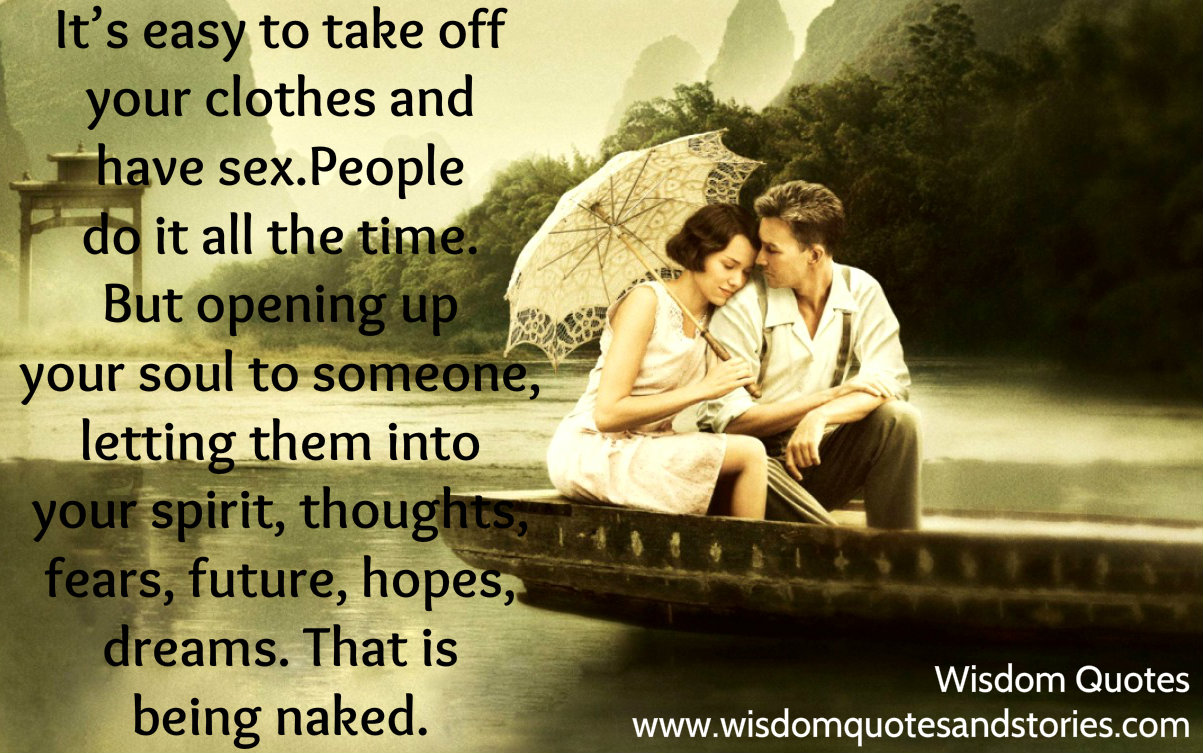
“Anima” is our deepest self, our “I” if you will, which is why the previous English translation rendered the phrase “and I shall be healed.” But, “I” does not capture it either or, to put it differently, the “I” in the modern West has taken on its own trajectory and acquired a meaning that is too ridden with autonomy to capture what is meant by “anima.” "Anima" is something that unites the human race and the "I" is not understood that way. And, as noted, in the biblical passage, the phrase is “my servant shall be healed.” So, what are we to do? If there is no imperfect rendering of the word, let us at least try to excavate what is meant: In our deepest, darkest, most broken selves, the parts where we do not want to let the light shine, where we prefer not even to consider because it just hurts too much, Jesus can shine His light and bring healing. “My soul” or “I” is not the key, is it? The key is the healing.Read the whole thing. It is very good. But the passage strikes me as getting at what we mean by Soul Sex. Something that really impacts us at a level that we don't even dare contemplate. That is so deep that only Jesus can get us into contact with that part of ourselves. Sex and marriage are powerful enough to let us connect with our spouse at that level. That connection is agape love which is the essence of God Himself. The same love that unites the 3 persons of the trinity into one God can unite man and woman into one flesh. That is soul sex. That is what we should be aiming for when we enter into the sexual embrace.
Monday, August 19, 2013
The Mind And God
Patrica Churchland has a new book on the Philosphy of the Mind. She makes a bunch of statements about religion. Mostly the same old errors. God of the gaps in reverse. Instead of arguing gaps in our knowledge prove God exists they assume a lack of gaps proves God does not exist. The argument does not work in reverse. A physical cause and effect and a spiritual cause and effect can both exist. One does not exclude the other. So when a farmer prays for rain and it rains he sees the spiritual dynamic of God answering prayer. A meteorologist might look at the same storm and see high pressure systems and low pressure system interacting and causing rain. They are both right. This is explained a bit more in point #1 here and here.
Then she says something truly interesting.
Many faiths do not say that. They see us as continuing without a body. It is one thing to imagine yourself without hands or feet but it it is a lot harder to imagine yourself without your memories or personality. In what sense are you still you?
It also makes more sense of the notion of purgatory. The idea of physical pain being associated with purging us of the stain of sin. If a lot of the brokenness of sin is physically in our neurons that control our thought patterns and subconscious reactions then why shouldn't we expect physical pain in repairing such things?
Then she says something truly interesting.
You begin your book, right off the bat, dispensing with the idea that human beings have a soul—some ethereal spirit that inhabits each of us.The "what's left?" comment is the error about the physical cause and effect pushing away the spiritual cause and effect. But then she talks about the resurrection of the body. It makes a lot of sense in this context. Why does Christianity insist on a life after death with a body? One reason might be that a lot more of who we are is embedded in our body than we really think about. Our memories, our personality, our moods, the list seems to keep growing. That does not cause a problem for Christianity because it teaches we will be going into eternal life with a body and a soul.
It doesn't seem to be. It's hard to see how it could be given the dependency of personality, mood, memory and seeing and perception on the physical brain. Once that's gone, what's left? There really isn't anything left. Except one can still have a sense of continuity with the wider universe while recognizing that the continuity is very biological in its underpinnings.You mean like "ashes to ashes, dust to dust"?Yes. I think some of the old boys had it right. Were there to be a resurrection it would have to be a resurrection of the body; but then, of course, it wouldn’t be quite the same body. It would have to a body that was glorified, and they're not quite clear what they mean about that, but it was obviously a better body than the one you died in.
Many faiths do not say that. They see us as continuing without a body. It is one thing to imagine yourself without hands or feet but it it is a lot harder to imagine yourself without your memories or personality. In what sense are you still you?
It also makes more sense of the notion of purgatory. The idea of physical pain being associated with purging us of the stain of sin. If a lot of the brokenness of sin is physically in our neurons that control our thought patterns and subconscious reactions then why shouldn't we expect physical pain in repairing such things?
Thursday, August 15, 2013
The Big Lebowski
This Lebowski dude is very frustrating in his lack of desire. He finds himself in a crisis situation. He does not really rise to the occasion. He shows a little concern but only in relation to his friend who is completely apathetic. He lets his friend do stupid things for selfish reasons and complains but never insists on a better course of action. All he has to do to be moral is to reject some truly bad ideas and he even fails at that. You wonder about a culture that has heroes like this. Someone who can confront all sorts of sexual deviancy and not show any trace of moral outrage. Someone who reacts to life and death situations by smoking more drugs. Someone who lets other people control him even when they are obviously morons.
You wonder how to evangelize a culture like that. It seems like the natural human desire to pursue what is true and beautiful and good has been dulled by sex and drugs and rock'n roll. I am reminded by a quote about our deepest fear:
Our deepest fear is not that we are inadequate. Our deepest fear is that we are powerful beyond measure. It is our light, not our darkness that most frightens us. We ask ourselves, Who am I to be brilliant, gorgeous, talented, fabulous? Actually, who are you not to be? You are a child of God. Your playing small does not serve the world. There is nothing enlightened about shrinking so that other people won't feel insecure around you. We are all meant to shine, as children do. We were born to make manifest the glory of God that is within us. It's not just in some of us; it's in everyone. And as we let our own light shine, we unconsciously give other people permission to do the same. As we are liberated from our own fear, our presence automatically liberates others.This is the fear that Lebowski seems to have conquered. He is totally OK being not very bright, not very talented and not very good looking. That is OK if there is some other way you are called to greatness. You need to be comfortable with the gifts you don't have. But Lebowski does not have some other greatness like the St Therese of Lisieux or even the Blessed Virgin Mary. He has nothing. He bowls a lot. He has many stupid conversations with his friends. He smokes drugs. There is no hidden greatness anywhere. We used to call people heroes because they did something great. Now we call people heroes for avoiding any impulse towards greatness.
The truth is we were made for something better. We know it. We are supposed to change the world. God created us to do that. If He created us for something then we are going to have the talent to do it. We are going to have the heart to do it and enjoy it. Ultimately, if we ask God's help, we are going to be successful. We don't have to marvel at how someone can let a bunch of immoral fools run his life and still end up happy. We can let God empower us to be true heroes and profoundly satisfied with life.
Tuesday, August 6, 2013
Prophet, Priest and King
When we are baptized we are given the 3-fold office of Prophet, Priest and King. This correlates well with what we often hear about the role of church leaders. People talk about how they are to teach, govern and sanctify. Teaching is the prophetic role. Sanctifying is the priestly role. Governing is what kings do. So we can see what that looks like in the clergy. But we are all called to be prophets and priests and kings. What does that look like? This is particularly relevant regarding the New Evangelization because a lot of what you see out there tends to emphasize one of these areas and imply that the others are less important. The truth is we need them all to succeed in the New Evangelization or any other spiritual endeavor.
Being a king involves governing you affairs in a holy manner. Think of the fruits of the spirit: love joy, peace, patience, kindness, goodness, gentleness, faithfulness and self control. When Catholics do these things they become magnets for lost souls. People want to know how to love authentically, how to have deep joy, how to be at peace with who they are, etc. Our role as laypeople is to show them that.
You look at the response to Pope Francis. What do people comment on? How he seems to really care about the poor and how he seems to be so real and so happy. It touches people. But we are all called to touch people with our holiness. Somehow society has associated holiness with being judgmental and boring. Whose fault is that? It is ours as lay Catholics. We have either not looked any different or the differences we have shown have not been clearly rooted in love and producing joy and peace. Obviously this is important for a bunch of reasons but it is also going to be the primary way to draw people to Jesus.
Secondly we have the priestly office. For laypeople that is prayer, fasting, alms-giving, and various other sacrifices we can offer up for the salvation of souls. How often do we do this? We are busy but a little can go a long way here. If we learn to lift up the struggles we face and turn them into an intercession for the soul of a loved one. That is what a priest does. He offers a sacrifice to God for another person. When we do that it not only aids in saving souls but it really sanctifies all of our life. It means we don't just pray when we have nothing else to do but we pray whenever we suffer. Way more often.
Lastly, being a prophet implies speaking God's word into a particular situation. Laypeople don't give homilies. Still they do need to know God's word and be able to communicate it. Many Catholics hate doing this. But the gospel is important. We need to understand it well, first of all, for ourselves, but also for other people. Yes we can draw people's interest with our actions and with our prayers. They are not going to respond to that by reading the Catechism or signing up for RCIA. What they are going to do is ask us questions. We need to be comfortable answering them. What is more we need to do it in a Christ-centered way. Don't just say "that is how I was raised" or give some other secular rationale for what you do. That is taking glory that rightly belongs to God and ascribing it to man. We believe the good we do comes from the grace of God. We need to say so both for our sake and the sake of the person asking.
For the New Evangelization to be a success we need to get all these things right. It is not a question of picking one and declaring it to be the key. We need them all. The good news is we don't need to start with a big group. The first evangelization started small. When we get it right it will grow. As long as it is growing it is only a matter of time before it transforms the church and eventually the world.
Being a king involves governing you affairs in a holy manner. Think of the fruits of the spirit: love joy, peace, patience, kindness, goodness, gentleness, faithfulness and self control. When Catholics do these things they become magnets for lost souls. People want to know how to love authentically, how to have deep joy, how to be at peace with who they are, etc. Our role as laypeople is to show them that.
You look at the response to Pope Francis. What do people comment on? How he seems to really care about the poor and how he seems to be so real and so happy. It touches people. But we are all called to touch people with our holiness. Somehow society has associated holiness with being judgmental and boring. Whose fault is that? It is ours as lay Catholics. We have either not looked any different or the differences we have shown have not been clearly rooted in love and producing joy and peace. Obviously this is important for a bunch of reasons but it is also going to be the primary way to draw people to Jesus.
Secondly we have the priestly office. For laypeople that is prayer, fasting, alms-giving, and various other sacrifices we can offer up for the salvation of souls. How often do we do this? We are busy but a little can go a long way here. If we learn to lift up the struggles we face and turn them into an intercession for the soul of a loved one. That is what a priest does. He offers a sacrifice to God for another person. When we do that it not only aids in saving souls but it really sanctifies all of our life. It means we don't just pray when we have nothing else to do but we pray whenever we suffer. Way more often.
Lastly, being a prophet implies speaking God's word into a particular situation. Laypeople don't give homilies. Still they do need to know God's word and be able to communicate it. Many Catholics hate doing this. But the gospel is important. We need to understand it well, first of all, for ourselves, but also for other people. Yes we can draw people's interest with our actions and with our prayers. They are not going to respond to that by reading the Catechism or signing up for RCIA. What they are going to do is ask us questions. We need to be comfortable answering them. What is more we need to do it in a Christ-centered way. Don't just say "that is how I was raised" or give some other secular rationale for what you do. That is taking glory that rightly belongs to God and ascribing it to man. We believe the good we do comes from the grace of God. We need to say so both for our sake and the sake of the person asking.
For the New Evangelization to be a success we need to get all these things right. It is not a question of picking one and declaring it to be the key. We need them all. The good news is we don't need to start with a big group. The first evangelization started small. When we get it right it will grow. As long as it is growing it is only a matter of time before it transforms the church and eventually the world.
Subscribe to:
Posts (Atom)