Sunday, December 27, 2015

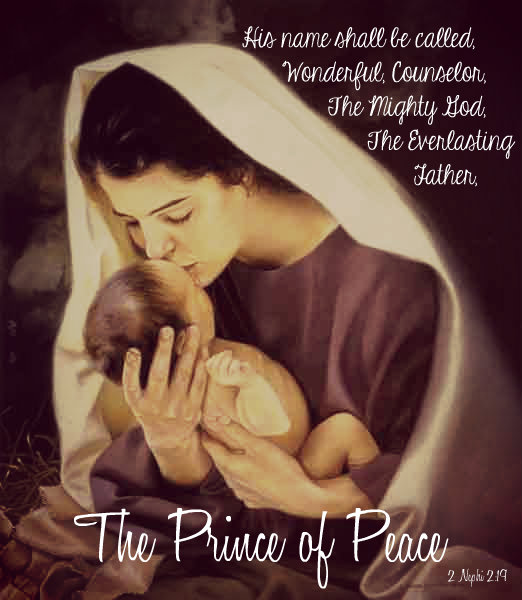
The Holy Family

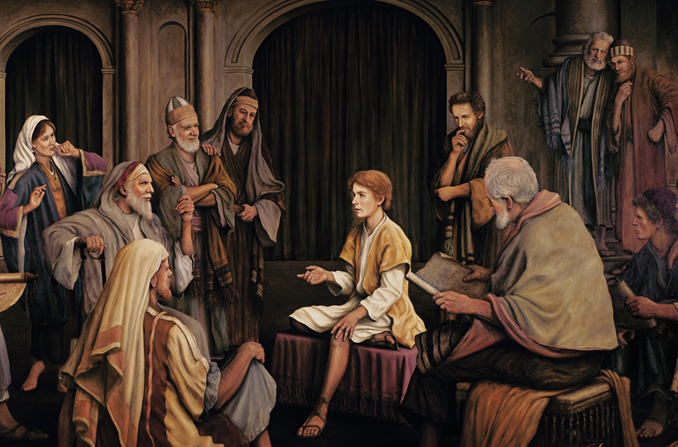
Boy Jesus Teaching the Elders in the Temple
Today we celebrate the feast of the Holy Family. It is always the Sunday after Christmas. On Dec 28th we have the feast of the Holy Innocents. That is when we remember the children in Bethlehem who were killed by King Herod. In recent times it has become traditional to think about abortion at that time. The modern massacre of children that continues in our society. Yet it is interesting that of the two feasts the Holy Family is considered greater. That is that focusing on how to do family right is more important than thinking about how badly society is currently doing with children. We don't ignore those dying from abortion but we want to give a Yes to how we should raise children more than we want to say No to what we are currently doing. That is true even when we are seeing the massive moral failure that abortion represents today. 

The story in the gospel is interesting. Jesus is a 12 years old. The go to Jerusalem for the Passover like they do every year. Jesus stays behind. His parents don't know. It takes them 3 days to find Him. You would think with a sinless mother and a sinless child stuff like this would not happen. Families are like that. When you think you have things figured out something happens to shock you. Kids are growing up and they are much more complex than we give them credit.

The other thing that happens is we underestimate the power of religious rituals. They went to the Passover every year. It became a little bit routine. A bit like going to church or doing family devotions can become routine for us. Yet these sort of things are quite powerful. Just because it is routine for us does not mean it is routine for our kids. When something impacts them we might not be ready for it. That is OK.

Then there is the 3 days. The span of time that is pointing forward to the 3 days that Jesus spends in the grave. The reality of the family is the reality of love. We can suffer when children make sinful choices and brings bad consequences on themselves. Yet there is the other side. They make good choices. Yet their love leads to suffering. It is still hard for the parents. 

It says they didn't understand. That Mary took these things into her heart. They talk about the difference between creating something out of knowledge or creating something out of love. If we build something with out knowledge we always understand it. Yet it is limited. It can never do more than what we know how to do. 

When we love another person there is no such limit. We often don't know what is going on because there is a relationship between God and this other person which we mostly don't see. Yet it is not limited by our knowledge either. Our children can end up being much greater than us. That is where the real joy comes. Not that we reproduced ourselves. Any ape can do that. What is great is when our children are able to love God and to bless people in ways we never could.     

Saturday, December 19, 2015

The Fruit of the Womb

Christmas has at its core the choice of Mary to say Yes to life. She chose a difficult path of motherhood in the face of ridicule so that God could do something wonderful through her. in this weeks gospel Elizabeth utters the now famous line from Luke 1:42, "Blessed are you among women, and blessed is the fruit of your womb." Elizabeth goes on to say, "Blessed is she who believed that the Lord would fulfil His promises to her."

Yet many still don't get the connection with our own openness to life. That what Mary did is what we are all called to do. When God calls us to bring new life into the world it is a sacred thing. That love must involve saying Yes to the fruit of that love. To render love sterile is to stop loving the whole person. Really not loving the whole person is not loving at all. 

I am reminded of some conversations at my company Christmas party. One workmate of mine was expecting his second child in February. Both him and his wife repeated a few time that they were definitely done after this. It seemed like with every message of congratulation came a message of sterilization. Some even went into comparing various vasectomy doctors. This is before baby #2 is even born. 

I didn't know what to say. I didn't say anything. Still I wondered at how we can see children as a blessing and at the same time be so eager to stop them from coming. Yet it maps very well to how society sees God. We want His blessings but we don't want too much. We want to love but only to a point. We don't want to give ourselves totally to the beloved. You see this in the high numbers who self-identify as Christians yet don't go to church often and don't follow most of the more counter-cultural teachings of Christianity. 

I am reminded of a gospel from a few weeks ago from Mark 9:36,37.
He took a little child whom he placed among them. Taking the child in his arms, he said to them, “Whoever welcomes one of these little children in my name welcomes me; and whoever welcomes me does not welcome me but the one who sent me.”
Here again Jesus connects welcoming children with welcoming God. Really there are a lot of parallels. We have an impulse to love children and an impulse to love God. We know that is right. Yet the cost is incalculable. It is like writing a blank cheque. Except what you are committing to is not limited to money. Both children and God are allowed to make very personal demands. 

We see this with refugees as well. They are not safe. Of course not. A culture that wants safe sex also wants safe refugees. Guess what? God is not about safe. He is about faith. He does not guarantee anything except Himself. Not comfort, not health, not success as you imagine it. He does say He will be with us. Is that enough? 

Sunday, December 13, 2015

Incarnation

Reading about Acedia. Acedia is sometimes translated as sloth. Yet that is not quite it. A lack of energy or motivation about spiritual pursuits is part of it. Yet St Thomas talks about a sadness. That is we are actually sad about the thought of becoming more holy. Then he gives an answer. He says we need the incarnation. We need to contemplate the fact that God became man so man can partake in God's nature. When we think about sharing in the divine love we can think it is impossible or we can think it would not be that much fun. The incarnation is God's answer to both those objections. It is possible because God is merciful. It is desirable because God is beautiful. Both these are communicated most powerfully through Jesus.

We need to be constantly reminded that our faith is not about a bunch of rules. It has rules but they are in the service of the greater good. Christmas is the time we think about that greater good. It is the time of Emmanuel, God is with us.

Acedia leads to us pursuing lesser goods. St Thomas talks about divine beatitudes and animal beatitudes. Animal blessings are just those that we get from being animals. We enjoy food and sex and music and athletics and walking in the sun. These are all good things we can enjoy because we are animals. Yet we are more than that. We are spiritual beings as well. We need to pursue God.

Christmas is a time where you see that very clearly. We have lots of lesser pleasures that are available. Our Catholic school has a Christmas concert. Do we sing about the incarnation or do we sing about Santa Claus? Happily this year teachers and principals had the courage to choose the former. What about our Christmas lights? Or Christmas cards? Or Christmas hampers? Are they just nice or do they call us to heaven?

Today is Gaudete Sunday. We are to rejoice. What are we to rejoice in? The fact that we are called to be holy. We are made for love and we can become united with a God who is love. There is a false humility where we tell ourselves that is not for us. That we are just plain folk and would never expect to be capable of heroic virtue. Like most false humility it is disguised pride. It rationalizes our failure to cooperate with the grace that will lead us there. So let us rejoice that God wants to take us all the way up. He wants to draw us to Himself. To experience an intimate and powerful union with our Heavenly Father. That is the dignity of our vocation. Pursuing anything less is acedia. 

Saturday, December 5, 2015

Peace

As we anticipate Christ's coming this week the church asks us to focus on peace. The peace that Jesus will bring. In the gospel John the Baptist quotes Isaiah.
A voice of one crying out in the desert:“Prepare the way of the Lord, make straight his paths.Every valley shall be filledand every mountain and hill shall be made low.The winding roads shall be made straight,and the rough ways made smooth,and all flesh shall see the salvation of God.”
The words describe a dramatic change when God arrives. Valleys filled. Mountains made low. Not just some of them but all of them. How are we supposed to have peace when God is coming with such power and demanding such huge changes? Maybe the second reading can make things clear:
Brothers and sisters:
I pray always with joy in my every prayer for all of you,
because of your partnership for the gospel
from the first day until now.
I am confident of this,
that the one who began a good work in you
will continue to complete it
until the day of Christ Jesus.
Jesus is going to come and make much needed changes. Yet they are going to take time and they are going to take cooperation. Because of that we can have peace. Otherwise we would never be comfortable with changes to your heart. The heart refers to our most private thoughts, emotions and opinions. Letting someone in that space means risking who you are. Yet that is what Jesus came to do. To change you in the most personal way possible.

Logically God is someone we can trust to change our hearts for the better. It is not like they are pristine and wonderful. They have been darkened by sin and scarred by pain. God is our creator and God is love so we can trust him completely to change us. He will not only make us better but make us more into what He originally intended us to be. So the changes will make you more authentically you and me more authentically me but still make us better. Nobody but God is qualified to do that.


Despite the logic it is hard to call this a peaceful process. We tend to stress out over it a lot. What if something goes wrong? Think of the folks as ISIS. They allowed someone to change their hearts and the result was not good. Yet the change goes so deep they can't even see it is not good. How can we be sure that won't happen to us? How would we know if it did?

What is going to give us this peace is an intimate relationship with God. That we experience God more and more.  It reminds be of a book by Henry Blackaby. He describes a process. Humans just need this sort of process. You can argue that someone should become Christian using Pascal's wager or whatever else. Yet we can't give that much of ourselves in response to logic. We need to trust. We need God to satisfy our deepest desires. That is what Jesus does. He comes to us so we can experience God peacefully rather than violently. 

Sunday, November 29, 2015

Maranatha

This Sunday we talk about the second coming of Jesus. In November we think about the last things. That is heaven, hell, death and judgement. In advent we think about waiting for the coming of Jesus. So the two connect well with one Sunday to contempalte the second coming. 

Really the coming of Jesus that matters most is when Jesus comes to us. When we encounter Him in our heart and allow Him to love us. Jesus approaches us in both ways. He comes as God in the form of a simple carpenter and even a baby. Yet He also comes to us as the King of Kings. We need to encounter Him both ways but often one comes first and the other lags behind a bit. 

This week's gospel contains some real apocalyptic language. The signs of the end times. There has been a ton of effort put into trying to figure out exactly what is going to happen by analysing these passages. It is probably the least useful area of biblical interpretation. I know when I was a teen I read a book by Hal Lindsey called "The Late, Great Planet Earth." It argued that a significant war was going to begin in 1984. Russia was going to invade the Middle East. Europe and China were going to get involved. This guy had it all figured out. Needless to say 1984 came and went and no such war took place. 

So if we are not supposed to figure out exactly what these prophecies mean then why are they there? Why does the church ask us to contemplate them this Sunday? We are supposed to learn some thing. One is that God's plan is going to involve a lot of sin and suffering. There will be days when it feels like evil has won. Can God's plan really involve wars and famines and persecutions and apostasies?  God answers that question for us. It can and it does. 

That is important because many suggest than an all-knowing, all-good and all-powerful God would prevent disasters from happening. It can be helpful and interesting to think about that argument and figure out why it fails. Yet it is important to note that God never makes that claim. He never says He won't tolerate the existence of any evil, any where. He says the opposite. That the forces of evil will be allowed to run their course. That when we do good many times we will feel like we are all alone. That it will take faith to believe God is in charge.

We can actually get great comfort from this. Why is that? The real problem of evil is not out in the world. The real problem of evil is in our hearts. We look at our lives and think an all-knowing, all-powerful, all-good God would not want anything to do with us. We want to be good but sometimes it seems that goodness is swimming upstream against a very negative tide. Yet if the world is an evil place and God still wants to save it then maybe we can also believe that this same God would want to save a guy like me. If the world's salvation takes a long time and has a lot of setbacks then we should not be discouraged if our own salvation takes time and includes many embarrassing episodes. 

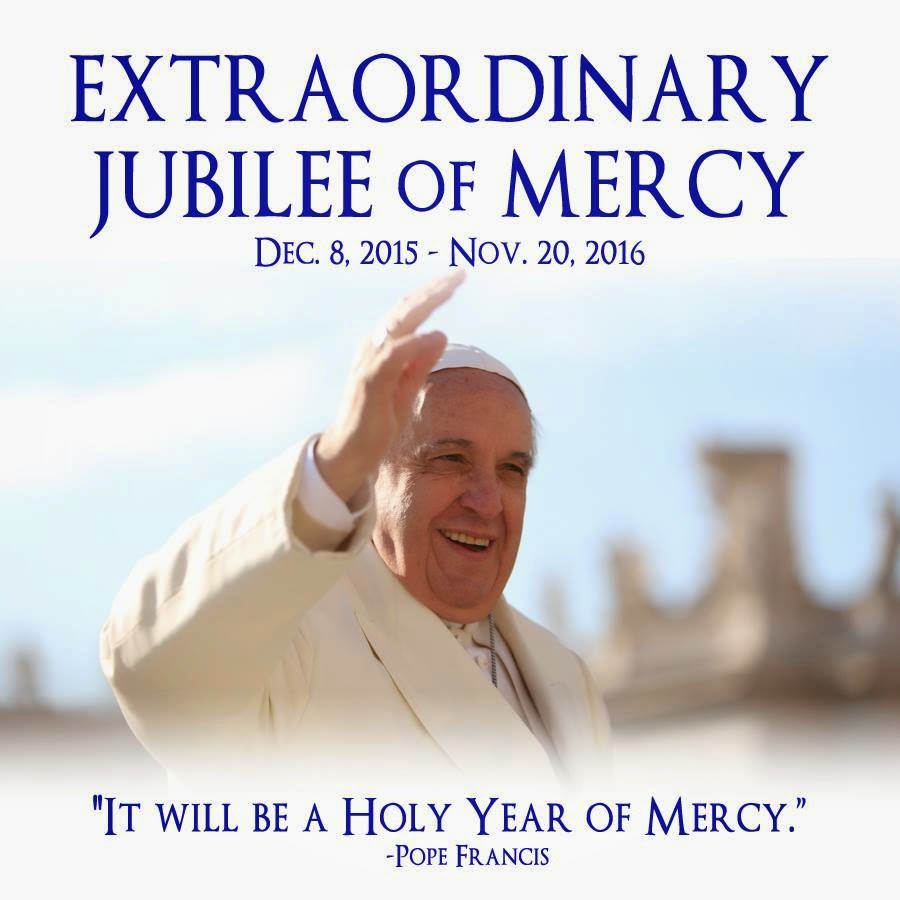
This is why it is fitting that the Year of Mercy that Pope Francis declared would start this advent. Ultimately it is all about Mercy. Judgement is there to show us the need for mercy. Jesus' birth show us how much He is willing to lower Himself to offer us mercy. God's willingness to tolerate centuries of evil and love us through it all despite the fact that many philosophers say it is illogical. That shows us just how awesome God's mercy is. 

Ultimately any encounter between us and God needs to involve extraordinary mercy. There is just no other way it can happen. The gap between us and God is just so great. Christmas is a time to marvel at God's amazing willingness to bridge that gap by becoming man. Yet His goal is not just to be on the same planet with you. His goal is intimacy. He wants to enter your heart and transform you. Astounding. 

Saturday, November 28, 2015

Aquinas

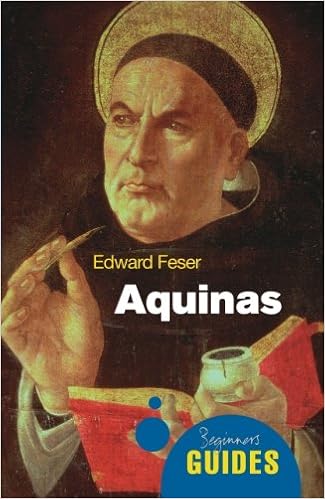
I am reading Ed Feser's Aquinas book. It is interesting. It gets very involved and deep into abstract thinking. What strikes me about it that is where Catholicism goes. He makes assumptions. He argues for them so they are not strictly assumptions but it is well known that many modern thinkers simply don't accept his argument. Yet it typically seems that Catholics should accept them. 

For example, the idea that the intellect is immaterial. That it exists apart from the body. Now I know that it is trendy to deny this. Modern science has shown some strong connections between what physically happens in the brain and our consciousness. People have have put 2 and 2 together and gotten 473. That is they have boldly claimed that this proves the entire human person can be reduced to a series of chemical reactions.  It does not prove that but it does make it more plausible to believe that. Yet as Catholics we don't believe that. We believe the dead continue to have intellect, emotion and will even apart from their bodies. That is why we pray to saints. 

Anyway, what you see in Aquinas is so different from what you see in the modern mind. Modern philosophy is dominated by scepticism. Scepticism is very good at tearing down and destroying ideas. It is not very good at building up anything that would lead to morality or meaning. We deal with it all the time. It is just very strange to read somebody who actually builds up something positive and dares to go deep and follow things to their logical conclusions.

I am reminded that Bl. John Henry Newman said that only Catholicism and Atheism stand up to scrutiny. Really I am thinking he should have said only Catholicism and nihilism because most atheists don't follow their reasoning to its hard conclusions. Catholicism comes to some pretty hard conclusions as well. Are we willing to go there? 

It makes me wonder because the battle lines in debates is very much between moderate scepticism and extreme scepticism. Mostly you run into atheists who claim they can be good while denying the very existence of goodness. Then you run into liberal Christians who are not that different. Very few defend traditional protestantism any more. There are many that believe it but not many that defend it. What it means is that when you encounter people where they are at your mind is often far from the real depth and beauty of the Catholic faith. 

I often find myself arguing that something, somewhere somehow has some meaning. What Catholicism really says is everything means everything. That is that everything that exists is kept in existence every moment by God. That means that everything that exists has the potential to connect us with God. It is such an awesome thought. Wrestling with it is such a different experience. 

You wonder where we should spend our time. Should we be out on the street meeting people where they are at like Pope Francis says or should we be unveiling Catholicism in all its depth and beauty like Pope Benedict did. 

Sunday, September 6, 2015

Interstellar and Religious Dialogue

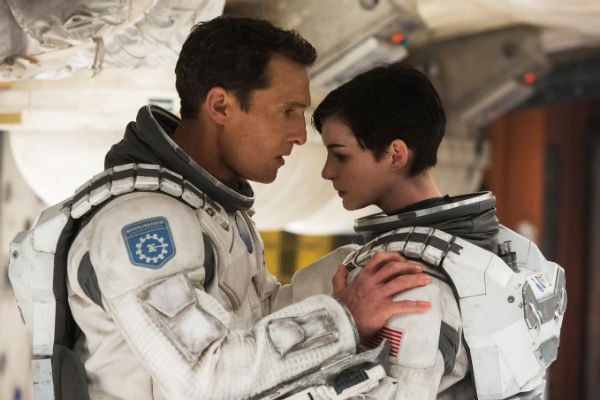
Just got back from vacation in Ireland. I saw Interstellar in the plane. I know I am way late to these things because I don't see all the latest movies. Still I thought is was pretty thought provoking. I fount a review in Christianity Today that picked up on some of those themes. Still I thought the stuff I read still missed a lot. I don't see the fact that movies tackle the same questions as religion as being that interesting. Of course these do. These are the deepest questions of human existence. Nobody denies that. So artists as well as scholars are going to address them. What I find interesting is that the artists give answers that have the same problems that bother skeptics so much about Christianity. Atheists sometimes claim that they could design a better word that the Christian God designed for us. Obvious they don't give details. Yet when even gifted SciFi writers try and imagine another world it runs into the same questions. I will explain after the break but there will be spoilers there.